Mini-Guide for Travellers: Ten Lesser-Known but Historically Significant Polish Towns Worth Visiting
This guide introduces ten Polish towns that tend to remain outside major tourist routes yet offer remarkable heritage, preserved architecture and authentic local life. Each destination presents a concise one-day route, characteristic historical details and regional dishes that help travellers form a realistic impression of Poland’s cultural depth in 2025.
Kazimierz Dolny and Sandomierz: Rivers, Trade Routes and Timeless Streets
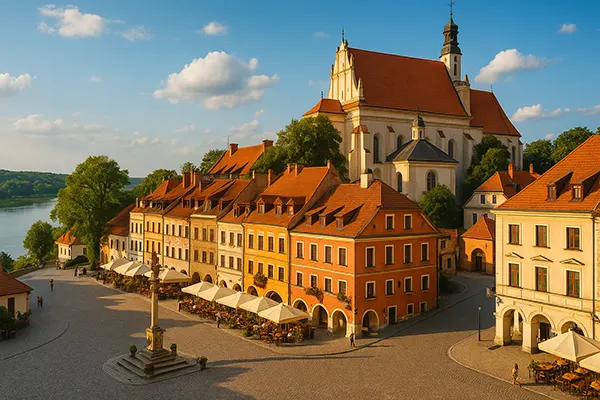
Kazimierz Dolny, located on the Vistula River, is one of Poland’s most beautifully preserved Renaissance towns. Its compact layout allows visitors to walk from the market square to the castle ruins and Three Crosses Hill within a single day. The town’s history is closely connected with grain trade, reflected in its old granaries and merchant houses that still define the skyline.
Sandomierz, also situated along the Vistula, developed as a strategic medieval centre. The Old Town retains its authentic structure with the Gothic town hall, Opatowska Gate and a network of underground merchant routes that can be visited with a guide. The Cathedral Basilica houses valuable frescoes that document several centuries of religious and social life.
Local cuisine reflects regional traditions: cebularz from Kazimierz Dolny offers a simple but characteristic taste of Lublin-style baking, while Sandomierz is known for its apple-based dishes and light wines originating from nearby vineyards. Both towns allow travellers to combine historical sightseeing with local food culture in a relaxed setting.
One-Day Route Highlights for Kazimierz Dolny and Sandomierz
A practical route in Kazimierz Dolny begins at the Market Square, followed by visits to the Parish Church, castle ruins and the renowned Three Crosses Hill viewpoint. The route finishes with a short walk along the Vistula embankment, ideal for observing the town’s landscape.
In Sandomierz, visitors can start with the Opatowska Gate panorama, continue towards the Market Square, then explore the cathedral and the Underground Tourist Route. The path naturally leads to the Vistula riverside, where travellers often complete their visit with regional pastries.
Both locations are compact enough to explore on foot, which creates a balanced day combining heritage, viewpoints and culinary stops without the need for additional transportation.
Zamość and Świdnica: Architectural Identity and Regional Culture
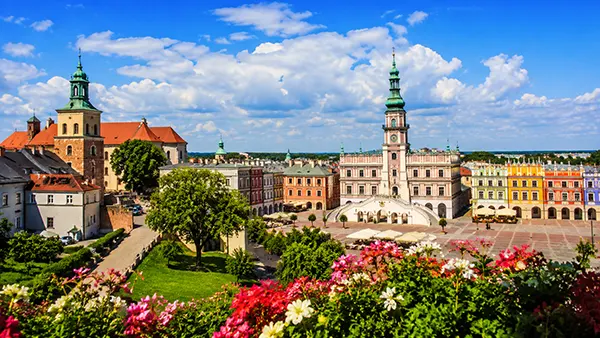
Zamość stands out as one of Europe’s best examples of a planned Renaissance town, designed by Bernardo Morando. Its symmetrical layout, market square arcades and preserved fortifications give it a distinct character recognised by UNESCO. Short walking routes allow visitors to understand the town’s design philosophy and its role as a multicultural trading centre.
Świdnica, located in Lower Silesia, developed as an influential medieval hub of craftsmanship and trade. The Church of Peace, built in the seventeenth century, remains one of the most significant timber-framed religious structures in Europe. Combined with the old market area, it forms a compact but content-rich itinerary.
Zamość offers regional dishes such as onion-filled pierogi and roasted meats influenced by historical Armenian communities. In Świdnica, Silesian cuisine includes potato dumplings, roulades and light desserts influenced by Czech and German traditions, reflecting the region’s layered history.
One-Day Route Highlights for Zamość and Świdnica
A suggested daily route in Zamość begins at the Great Market Square, continues through the Armenian houses, then leads along the defensive walls and the palace complex. The route offers a clear sense of the town’s geometrical structure and architectural consistency.
Świdnica’s route starts in the central square, followed by a walk to the Church of Peace, where visitors often spend additional time exploring its interior decorations. Returning through the narrow streets towards the old town hall allows travellers to appreciate the area’s historical continuity.
Both towns provide a balanced mix of cultural exploration and urban atmosphere, with accessible routes suitable for travellers seeking an informative but manageable schedule.
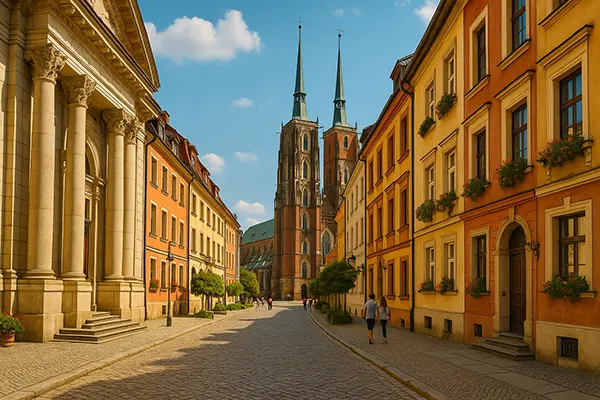
Additional Lesser-Known Towns: Chełmno, Łowicz, Tarnów, Płock, Przemyśl and Kłodzko
Chelmno, known for its medieval urban layout, is often called the “city of lovers” due to its connection with St Valentine’s relics. Its town walls and Gothic churches remain well-preserved, offering a strong sense of authenticity. A one-day route includes the market square, ramparts and the riverside viewpoint.
Łowicz is associated with Mazovian folklore, famous for its striped costumes and traditional cut-out art. Travellers can explore the triangular market square, ethnographic museums and local eateries serving dumplings and hearty stews influenced by rural traditions. The town provides a realistic picture of Poland’s central heritage.
Further south, Tarnów, Płock, Przemyśl and Kłodzko each contribute unique historical insights: Tarnów with its Renaissance houses, Płock with its cathedral hill, Przemyśl with its nineteenth-century fortifications and Kłodzko with its medieval bridge and fortress. These towns offer compact walking itineraries that allow travellers to combine architectural heritage with local gastronomy.
One-Day Route Highlights for the Remaining Six Towns
Chelmno’s route includes a circular walk along the fortifications, followed by visits to the parish church and the old monastery complex. The route showcases the town’s medieval roots and preserved street network.
Łowicz offers a cultural route focused on the ethnographic museum, the cathedral and traditional workshops. Visitors often include a short tasting stop to try Mazovian dishes prepared using local produce.
The southern and central towns provide flexible itineraries: Tarnów’s route emphasises the old Jewish district, Płock’s route highlights the cathedral hill, Przemyśl offers a path along military fortifications and Kłodzko invites travellers to explore its bridge, tunnels and fortress area. These routes suit travellers seeking varied but historically grounded experiences.