Zakopane Without Crowds: A 4-Day Tatra Itinerary with Quieter Trails (2026)
Zakopane is one of the most visited mountain towns in Central Europe, and for many travellers it becomes a lesson in queues rather than nature. The good news is that the Polish Tatras still offer calm valleys, panoramic ridges and well-marked routes if you plan your days around real crowd patterns, transport logistics and seasonal conditions. This itinerary is designed for 2026 travel: it avoids the most congested hours, uses alternative trailheads where possible, and explains what to expect on the most famous routes.
Day 1: A gentle start near Zakopane with a viewpoint that feels alpine
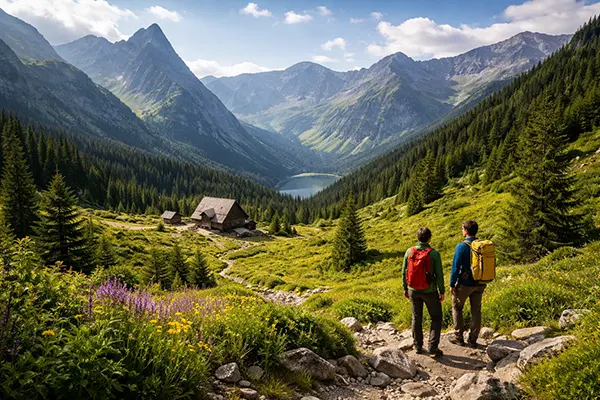
The first day should give you mountain atmosphere without exhausting you. A practical option is Dolina Strążyska, which is close to the town and easy to reach on foot or by short taxi ride. The trail is mostly sheltered, making it suitable even when wind is strong on higher ridges, and it offers a clear “Tatra feel” without committing to a long climb.
If you want an added highlight, continue to Siklawica Waterfall. It is not the largest waterfall in the region, but it is a pleasant extension and usually less stressful than the more crowded “iconic” attractions. A relaxed pace also helps you judge your fitness for the harder days that follow.
For a sunset view without the heaviest crowds, consider Sarnia Skała. It provides a wide panorama towards Giewont and the surrounding peaks, yet it tends to feel calmer than the most popular summits. In 2026, crowd behaviour in Zakopane is predictable: mornings are packed, midday can be calmer on shorter routes, and late afternoon often becomes surprisingly quiet once day trippers start leaving.
Day 1 practical notes: timing, clothing, and small mistakes to avoid
In the Tatras, “easy day” does not mean “no preparation”. Even in late spring and early autumn, temperatures can drop quickly once you stop moving. Carry a light waterproof jacket and an insulating layer, because sudden rain and wind are common in this region.
Do not rely on hut food as your main plan. Mountain huts can be busy and sometimes run low on popular items during peak periods. It is safer to bring enough water and snacks for the whole route, then treat anything you buy on the trail as optional.
Finally, avoid the most common first-day error: starting too early and getting stuck behind tour groups. For short trails near Zakopane, beginning closer to late morning can reduce stress, because the “early rush” has already moved deeper into the mountains.
Day 2: Western Tatras for space, longer walks, and fewer bottlenecks
The Western Tatras usually feel less cramped than the famous eastern routes, especially if you walk beyond the first easy kilometres. One of the best choices is the Chochołowska Valley. Many visitors stop at the early sections, but hikers who continue further often experience far more space, particularly on weekdays.
A strong approach is to treat the valley as a gateway to a longer day rather than a simple out-and-back. You can extend to higher ground depending on the season and conditions, then return the same way or follow a variant path if open. This kind of planning matters in 2026 because “classic” routes have become predictable crowd magnets, while longer loops naturally filter out casual visitors.
If you prefer variety without committing to higher terrain, the Kościeliska Valley is a useful alternative. It offers multiple side paths, viewpoints and optional detours, and it remains one of the best choices when clouds are low because you can turn back at many points without losing the entire day.
Day 2 practical notes: how to keep the route calm and efficient
The simplest crowd strategy is walking against the flow. Many people follow the main trail straight in and return the same way. If you choose a detour early, or build in a small loop where routes allow, you often separate from the largest groups within the first hour.
Public transport and shared minibuses remain common in the Zakopane area, and in 2026 they are often easier than fighting for parking near the most popular entrances. If you travel in peak season, consider leaving your car in Zakopane and using a bus to the start point, then hiking back to a different exit if your route allows it.
Weather is your real “boss” here. If you notice increasing wind or fast-moving cloud, resist the temptation to push for a ridge just because it is on the plan. The best Western Tatra day is still a success even if you stay in the valleys and focus on scenery, not altitude.
Day 3: A smarter way to see the Morskie Oko area without the worst crowd experience
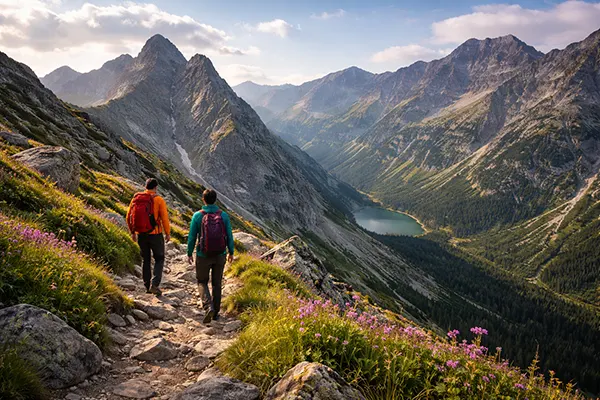
Morskie Oko is stunning, but it is also one of the busiest places in Polish mountain tourism. The main access road and the lake area can become extremely crowded, especially in summer and during holiday weeks. If you want the scenery without the “theme-park feeling”, you need to plan around the day’s peak hours and understand how access transport works.
By 2026, the access system has been changing compared to older guidebooks. In recent years, official decisions and agreements have pushed towards reducing traditional horse transport on the route and shifting access towards shorter segments and electric transport options for part of the road. This can influence where queues form and how early people arrive, so relying on outdated travel blogs can easily lead to unrealistic planning.
The best solution is to make Morskie Oko only one part of a longer hiking day. If conditions are safe, continue beyond the main lake to Czarny Staw pod Rysami. Many visitors stop at Morskie Oko itself, and the additional climb acts like a filter: the route becomes calmer, the views are more dramatic, and you spend less time surrounded by noise.
Day 3 practical notes: when to start and what to watch out for
If you want the quietest experience, start very early. For summer travel, arriving at the trail entrance before 7:00 can make a major difference. Another workable option is a later start with a late return, but you must be confident about daylight and conditions, especially outside high summer.
Do not underestimate how quickly conditions can change on the higher section to Czarny Staw. Ice can remain on shaded parts of the trail well into spring, and the climb becomes risky without proper footwear. If you are visiting outside stable summer weather, stop at Morskie Oko and save steeper routes for a safer season.
Finally, plan for logistics rather than luck. Transport lines, road works, and seasonal restrictions can change. In 2026, the most reliable habit is checking official park announcements and local information the day before, rather than trusting a single old itinerary.