Bieszczady for First-Time Visitors: A 4-Day Route with Easy Trails, Public Transport and a Rain Backup Plan
Bieszczady National Park and the surrounding ranges in south-eastern Poland offer a very different mountain experience from the Tatra peaks. Here you will not find sharp ridgelines with chains and heavy tourist traffic, but rolling “poloniny” meadows, long horizons and quiet forest paths. This four-day itinerary is designed for beginners who want real mountain walking without technical sections, who travel without a car, and who need a practical plan that works even in autumn, when daylight is short and weather can change quickly.
Day 1–2: Easy Poloniny Trails for a First Bieszczady Experience
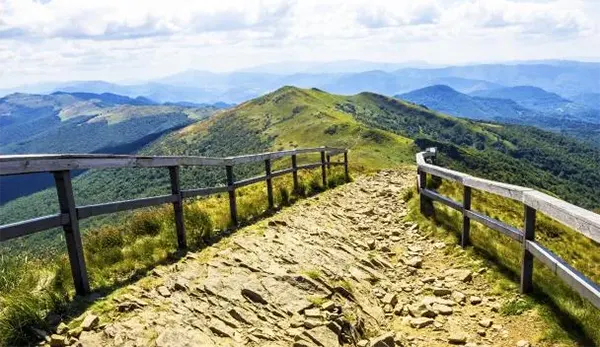
For a first visit, base yourself in Wetlina or Ustrzyki Górne, both well connected by regional buses from Sanok and Lesko. Start with Połonina Wetlińska, one of the most accessible and rewarding routes in the area. From the Przełęcz Wyżna car park (reached by bus), the ascent takes around 1.5–2 hours at a steady, comfortable pace. The path is wide, clearly marked and free from exposed or technical sections, making it suitable for beginners with basic fitness.
On the second day, head to Połonina Caryńska. The classic traverse from Brzegi Górne to Ustrzyki Górne takes 4–5 hours including breaks. The climb is steady rather than steep, and the ridge walk offers open views across Poland and into Slovakia and Ukraine. In autumn 2026, sunrise is after 7:00 am and sunset around 4:30–5:00 pm, so begin no later than 9:00 am to ensure a relaxed return before dusk.
If you prefer a forest route with gentler gradients, consider the trail to Tarnica (1,346 m), the highest peak in the Polish Bieszczady. Although slightly longer, it remains non-technical in normal conditions. The final wooden steps near the summit are straightforward, and there are no chains or scrambling sections. Plan 5–6 hours for the round trip and always factor in extra time for rest stops and photography.
How to Plan Each Day with Shorter Autumn Daylight
In October and early November, daylight can be limited to around nine hours. Build your schedule backwards from sunset: aim to be descending by 2:30–3:00 pm. Even simple trails become more demanding in fading light, particularly in forested sections where darkness arrives earlier than expected.
Carry a head torch even if you do not plan to hike after dark. It is a basic safety item rather than an optional extra. Mobile signal in Bieszczady is generally available on open ridges but may disappear in valleys, so do not rely entirely on online maps. Download offline maps or use a traditional paper map from a local tourist office.
Allow realistic walking times. In Bieszczady, average hiking speed for beginners is often 2–3 km per hour on ascents. Add 10–15 minutes per hour for short breaks. This conservative pacing reduces fatigue and lowers the risk of late returns, especially when trails are damp or covered with fallen leaves.
Getting There Without a Car and Choosing a Practical Base
From Kraków or Rzeszów, take a train to Sanok or Zagórz. From there, regional buses connect to Wetlina, Cisna and Ustrzyki Górne. In 2026, seasonal bus timetables still vary between summer and autumn, so check updated schedules a few days before departure. Do not assume frequent evening services; the last bus may depart mid-afternoon.
Wetlina works well as a base for Połonina Wetlińska and Smerek, while Ustrzyki Górne is ideal for Caryńska and Tarnica. Both villages offer guesthouses, small hotels and mountain hostels. Booking in advance is advisable during long weekends, but outside peak summer months you can often find availability midweek.
Choose accommodation within walking distance of a bus stop and a grocery shop. Having easy access to food and transport simplifies logistics and reduces the need for early-morning taxi arrangements. Many guesthouses provide packed breakfasts on request, which is useful when you need an early start.
Daily Logistics: Food, Water and Realistic Distances
There are very few mountain huts directly on the main Bieszczady trails compared with the Tatras. While the Chatka Puchatka shelter on Połonina Wetlińska has reopened in modern form, do not depend on it being open in poor weather or off-season days. Carry at least 1.5–2 litres of water per person.
Shops in Wetlina and Ustrzyki Górne are small but sufficient for basic supplies: bread, cheese, cured meats, fruit and snacks. Buy provisions the evening before, as shops may close early outside high season. On longer routes, high-energy snacks such as nuts and chocolate are practical and lightweight.
Keep daily distances moderate: 10–15 km with 500–700 metres of ascent is more than enough for a beginner itinerary. Bieszczady are about steady enjoyment rather than ticking off summits. Finishing with energy in reserve is always better than pushing too far and risking a late descent.
What to Do If the Weather Turns and Basic Mountain Safety
Bieszczady weather can change rapidly, particularly in autumn. If heavy rain, fog or strong wind makes ridge walking uncomfortable, switch to lower forest trails. The valley route along the Wetlina River or shorter woodland walks near Cisna offer shelter from wind and reduce exposure.
Another alternative for a rainy day is to visit the Bieszczady Forest Railway (Bieszczadzka Kolejka Leśna) from Majdan near Cisna. It runs seasonal services and provides a relaxed way to experience the landscape without committing to a full hike. Small regional museums in Sanok, including the open-air ethnographic museum, are also worthwhile if you base yourself further north.
For safety, inform someone at your accommodation about your planned route and expected return time. Emergency number in Poland is 112, and the mountain rescue service GOPR operates in Bieszczady. Save the GOPR emergency number (601 100 300) in your phone before you set out.
Core Safety Principles for First-Time Hikers
Dress in layers. Even on mild days, wind on the poloniny can lower perceived temperature significantly. A waterproof jacket, warm mid-layer and hat are essential from September onwards. Trails can become muddy after rain, so proper hiking boots with grip are strongly recommended.
Maintain a steady pace that allows conversation without breathlessness. Sudden fatigue increases the likelihood of slips and poor decision-making. Take short, regular breaks rather than one long stop that cools the body excessively.
Plan to be back in the village before dusk. In forested terrain, darkness falls quickly and waymarks become harder to spot. A simple rule for beginners in Bieszczady is this: if conditions deteriorate or timing becomes uncertain, turn back early. The mountains will still be there tomorrow.