Kłodzko Valley and Table Mountains: 4 Days Without a Car Based in Kłodzko or Kudowa-Zdrój
The Kłodzko Valley is one of the few regions in Poland where a short trip without a car feels practical rather than limiting. Railway connections, local buses and компактні відстані allow you to move between towns, spa resorts and mountain trails without complicated logistics. This four-day route is designed around real transport options available in 2026, combining Kłodzko’s historical core with the distinctive sandstone landscapes of the Table Mountains.
Choosing Between Kłodzko and Kudowa-Zdrój as Your Base
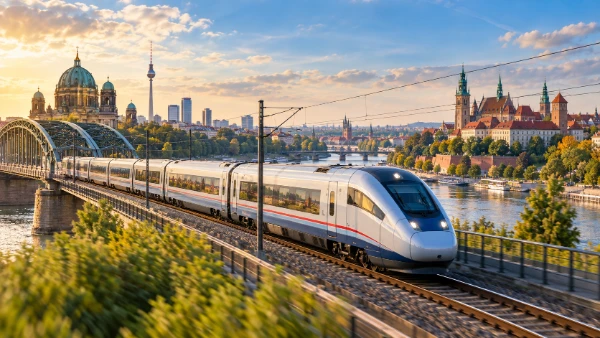
Kłodzko is the most logical starting point if you rely entirely on public transport. The town sits on an active railway line linking Wrocław with Kudowa-Zdrój, and most regional trains stop here. This makes it easy to plan day trips without strict timing, as departures run regularly throughout the day.
Kudowa-Zdrój offers a different experience. It is quieter, more focused on nature and located right next to the Table Mountains National Park. If your main goal is hiking, staying here reduces travel time significantly, especially for early morning starts.
In 2026, both towns remain well connected by regional trains and buses, but evening transport is less frequent. This means planning your return journeys in advance is still important, particularly outside peak tourist season.
Accommodation Strategy for a 4-Day Trip
Staying all four nights in Kłodzko gives you flexibility. You can adjust your маршрут depending on weather or transport delays without needing to change hotels. This option works well for travellers who prefer a steady base.
Splitting your stay between Kłodzko and Kudowa-Zdrój is more balanced. Two nights in each location reduce daily travel and allow you to experience both the historical and natural sides of the region at a slower pace.
Accommodation standards are consistent across both towns. Expect small guesthouses, apartments and spa hotels rather than large chains. Booking in advance is recommended in summer, as availability drops quickly in popular periods.
Day 1–2: Exploring Kłodzko and Nearby Spa Towns
Start with Kłodzko itself. The fortress dominates the town and remains its main attraction. Visiting includes walking through underground passages and climbing to panoramic viewpoints. Allow at least two hours to explore properly.
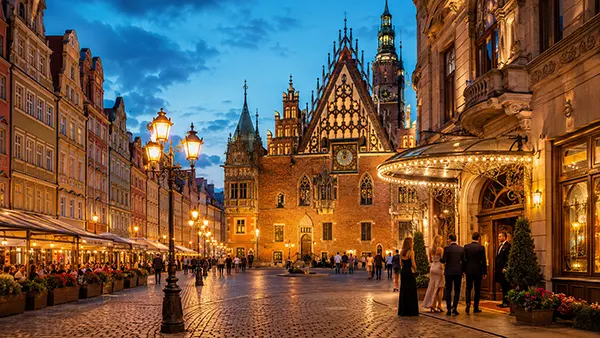
The old town is компактний and easy to navigate on foot. The stone bridge and surrounding streets create a setting that feels historical but not overcrowded. This makes it comfortable for a slow first day after arrival.
On the second day, take a short train ride to Polanica-Zdrój. The journey takes around 15 minutes. The town is known for its spa park, mineral water facilities and relaxed atmosphere, making it ideal for a half-day visit.
Adding Duszniki-Zdrój to Your Route
From Polanica-Zdrój, continue to Duszniki-Zdrój by train. Travel time is around 10–15 minutes. This town is quieter and has a more traditional character, with fewer visitors and a slower pace.
The Chopin Museum is one of the key attractions, connected to the composer’s early performances in the area. Another highlight is the historic paper mill, which remains one of the best-preserved sites of its kind in Europe.
Combining Polanica and Duszniki in one day is realistic due to short distances. However, if you prefer a slower pace, you can split them across two days and spend more time walking in surrounding parks and forest paths.
Day 3: Kudowa-Zdrój and Szczeliniec Wielki
Travel to Kudowa-Zdrój in the morning. The train from Kłodzko takes around 40 minutes. After arrival, you can leave luggage at your accommodation and explore the town centre and spa park.
One of the most unusual sites here is the Skull Chapel. It is small but historically significant, built from human remains dating back to past conflicts in the region. Visiting takes only a short time but adds context to the area’s history.
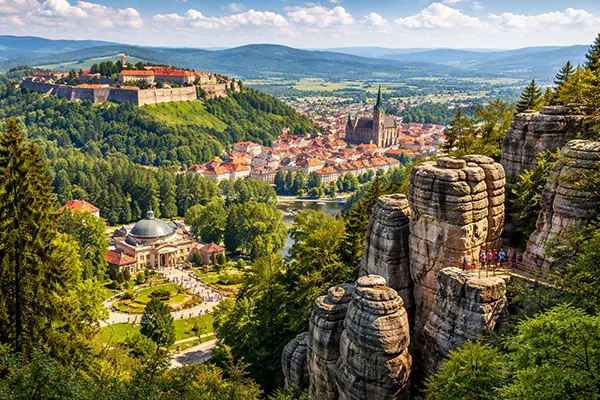
In the afternoon, head towards Szczeliniec Wielki. This is the highest peak in the Table Mountains and one of the most recognisable natural landmarks in Poland. The маршрут starts near Karłów and includes a steep but well-maintained path.
Reaching the Mountains Without a Car
During the main season, buses run from Kudowa-Zdrój to Karłów. Outside these months, connections are less frequent, so checking schedules in advance is essential. Taxi services exist but are limited and should be arranged заранее.
The hiking route to Szczeliniec includes stone steps and narrow passages between rock formations. It is accessible to most travellers with basic fitness, but comfortable footwear is necessary.
At the top, a circular path leads through rock formations with natural viewpoints. The terrain is unique, with flat surfaces and corridors formed by erosion over time. Allow at least two hours for the full visit.
Day 4: Błędne Skały and Return Planning
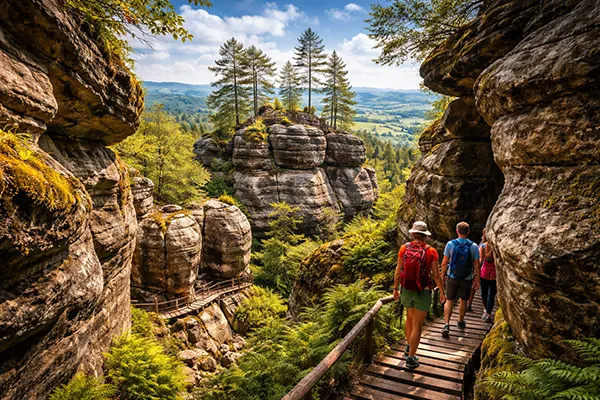
Błędne Skały offers a different type of landscape compared to Szczeliniec. Instead of open viewpoints, the focus is on a rock labyrinth with narrow проходи and unusual formations. Some sections require squeezing through tight gaps.
Access without a car is possible but slightly more complex. In peak season, shuttle buses operate from nearby towns. Outside these periods, you may need to combine a bus journey with a short hike to reach the entrance.
The visit itself is shorter than Szczeliniec, usually taking around one hour. This makes it suitable for a final day before returning to your starting point.
Transport Back and Final Tips
From Kudowa-Zdrój, trains back to Wrocław usually require a change in Kłodzko. Total travel time is around two to two and a half hours. Morning departures provide the most reliable options.
If you return to Kłodzko for your final night, you gain more flexibility with onward connections. This can be useful if you plan to continue travelling in Poland or towards the Czech border.
This four-day маршрут works well because distances are short and transport links are functional. With basic planning, it allows you to see historical towns, spa resorts and mountain landscapes without relying on a car.