Szczecin and Usedom Without a Car: A Four-Day Cross-Border Route by Train and Bus
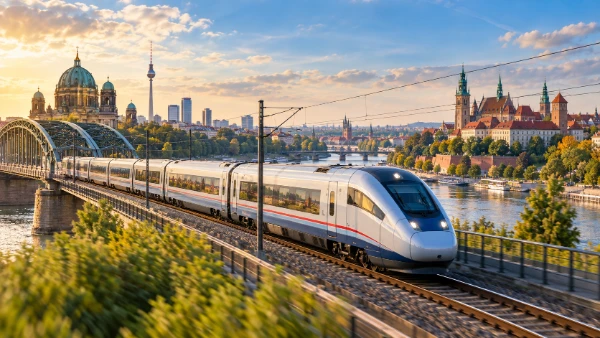
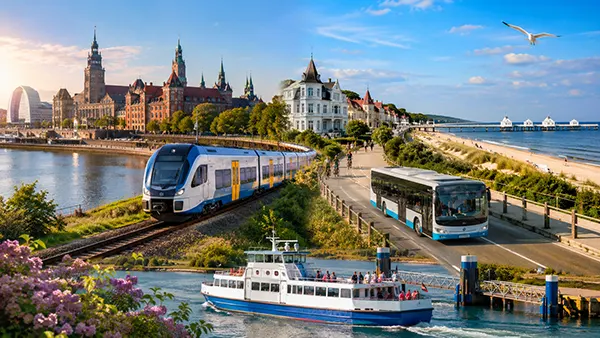
This four-day route links Szczecin with the Polish and German parts of Usedom without requiring a car, a taxi-heavy schedule or complicated reservations. The journey begins and ends in Szczecin, includes one night in the city and two nights in one of the Kaiserbäder resorts, and uses regional trains, Szczecin trams and buses, the municipal ferry in Świnoujście, Usedom’s RB23 and RB24 railway lines, and local island buses. It suits travellers who want a balanced mix of urban history, waterfront walks, Baltic beaches and smaller seaside towns. The timings below are deliberately realistic rather than rushed: museums and seasonal attractions still need their current opening hours checked, while railway departure times should always be confirmed shortly before travel because engineering work and summer amendments can alter individual services.
Day 1: Szczecin from the Main Station to the Oder Waterfront
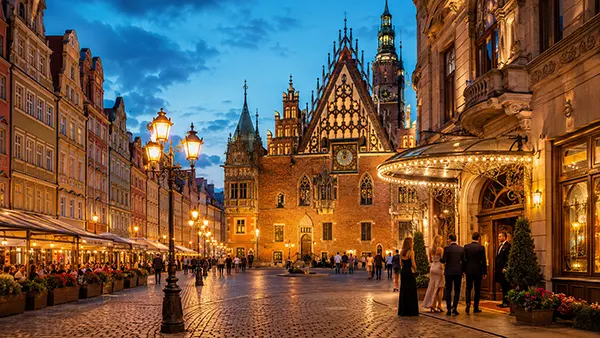
Start at Szczecin Główny, where the city’s marked tourist route begins close to the railway station. The full red-line circuit is about seven kilometres and links 42 places of interest, but there is no need to complete every section. A practical first-day walk leads towards the Cathedral Basilica of St James, the reconstructed Castle of the Pomeranian Dukes and the nearby old-town quarter around Rynek Sienny. This central sequence gives useful historical context without taking you far from public transport. Leave your luggage at your accommodation before starting, as several streets rise noticeably from the river and a suitcase makes the route less comfortable.
Continue from the castle towards the white, angular Szczecin Philharmonic and then to Wały Chrobrego, the monumental terrace above the Oder. The embankment is one of the best places to understand Szczecin’s relationship with the river, port and former German city of Stettin. Allow time for the National Museum buildings or the Dialogue Centre Upheavals when the weather is poor, but do not try to fit both major museums and the entire walking route into a single afternoon. Two indoor visits, lunch and the principal outdoor sights are a more sensible limit, especially after a morning arrival.
Finish the day on Łasztownia, reached by crossing the river near the castle area. The Maritime Science Centre, historic cranes, broad quays and views back towards Wały Chrobrego make this district worthwhile in daylight and around sunset. The centre’s interactive exhibition and planetarium require more time than a casual visit, so book a session only when your train reaches Szczecin early. For the evening, return to the city centre by tram or bus and stay within easy reach of Szczecin Główny, Brama Portowa or the old town. These areas make the next morning simpler and also provide a wider choice of cafés and restaurants than the station’s immediate surroundings.
How to Use Szczecin Public Transport Efficiently
Szczecin has an extensive network of trams and buses, and central visitors rarely need more than a few short rides. In 2026, daytime services generally begin shortly after 04:00 and run until about 23:00, with night buses covering the hours in between. The fare system is time-based, so transfers are permitted while the ticket remains valid. From 1 July 2026, the standard 15-minute ticket costs PLN 3, while express bus routes A, B and C require the relevant higher fare. Tickets are sold through mobile applications, ticket machines at selected stops and machines inside many vehicles.
Pay attention to validation rules rather than assuming that purchase alone activates every ticket. From July 2026, tickets bought from an on-board machine must be validated by scanning the QR code displayed above the vehicle doors. A 24-hour Szczecin Tourist Card can be useful when your plan includes several rides and participating museums, while ordinary timed tickets are usually cheaper for a mostly pedestrian first day. Live departures are shown through the city transport information services and common journey-planning applications, which is helpful when evening works cause a tram diversion.
Keep the first evening relatively light because the coastbound journey begins the next morning. Buy food and water before reaching the train, confirm the departure from Szczecin Główny rather than Szczecin Dąbie, and check whether your chosen service terminates at Świnoujście or continues to Świnoujście Port. A small overnight bag is far easier than a large rigid suitcase on the island trains, ferry ramps and seaside promenades. For this itinerary, the most convenient arrangement is one night in Szczecin followed by two nights in Ahlbeck, Heringsdorf or Bansin, so accommodation does not have to be changed every day.
Day 2: Regional Train to Świnoujście and the Kaiserbäder
Take a morning POLREGIO service from Szczecin Główny to Świnoujście. The summer 2026 timetable includes several direct trains, and many journeys take roughly two hours, although stopping patterns vary. An arrival between 10:00 and 11:00 leaves enough time for both Świnoujście and the German resorts. The Polish main-line station stands on the Wolin side of the Świna, close to the Warszów ferry landing. From there, the short municipal Bielik crossing takes pedestrians and cyclists to the central part of Świnoujście on Usedom; it is normally free, but the operating pattern can change during repairs, strong winds or tunnel maintenance.
Spend two or three hours in Świnoujście rather than treating it only as a transfer point. From the city-side ferry landing, walk through the central streets towards Park Zdrojowy, the spa quarter and the seafront promenade. The beach is broad, while the windmill-shaped Stawa Młyny navigation mark stands farther west at the end of the breakwater and requires additional walking time. Travellers interested in military history can visit the western forts, but the lighthouse is on the opposite, Wolin side of the river and is not practical to combine with the German resorts on the same day. Choosing either the promenade or the fortifications keeps the schedule comfortable.
Continue to Świnoujście Centrum, the Polish terminus of the RB23 island railway. Trains run through Ahlbeck, Heringsdorf and Bansin, placing the main resorts within an easy sequence of short rides. Leave the train first at Seebad Ahlbeck to see the historic pier, the clock near the promenade and the villas along Dünenstraße, then walk part of the coast towards Heringsdorf. The linked promenade between Bansin, Heringsdorf, Ahlbeck and Świnoujście is about 12 kilometres, so there is no benefit in covering all of it with luggage. Stay near a railway station in Heringsdorf or Bansin and use the train or a local bus for the final section.
Day 3: Zinnowitz and Peenemünde by Island Railway
Use the third day for northern Usedom. Take RB23 from Bansin, Heringsdorf or Ahlbeck to Zinnowitz, then change to RB24 for Peenemünde. The branch is simple to use because Zinnowitz is the connecting station and the 2026 timetable is arranged around onward island services, although not every connection is equally short. Peenemünde is best known for the Historical Technical Museum in the former power station, which presents the development of military rocket technology, forced labour and the consequences of weapons research. Allow at least two to three hours; it is a serious historical visit rather than a quick photo stop.
Return to Zinnowitz for lunch and a walk to the pier and beach. Zinnowitz is larger and more active than the smaller central-island resorts, with a compact centre between the station and the sea. On a wet or windy day, shorten the beach section and use a VVG local bus for a nearby indoor attraction or an inland village that has a workable same-day return. The Usedom-Ticket covers the participating island buses as well as RB23 and RB24, which makes an unplanned change easier. Check the return departure before leaving the station area, as bus frequency is generally lower than the coastal railway frequency.
On the journey south, consider a short stop in Koserow, Ückeritz or Bansin rather than adding another long excursion. Koserow offers access to the narrow central part of the island and a modern pier; Ückeritz has a quieter wooded setting; Bansin provides the easiest evening finish for travellers staying in the Kaiserbäder. One stop is enough. Trying to combine Peenemünde, Zinnowitz, several villages and all three major resorts creates a day dominated by waiting and boarding. The better rhythm is a focused museum visit, one seaside town and a relaxed return for dinner near your accommodation.
Day 4: Bansin, Świnoujście and the Return to Szczecin
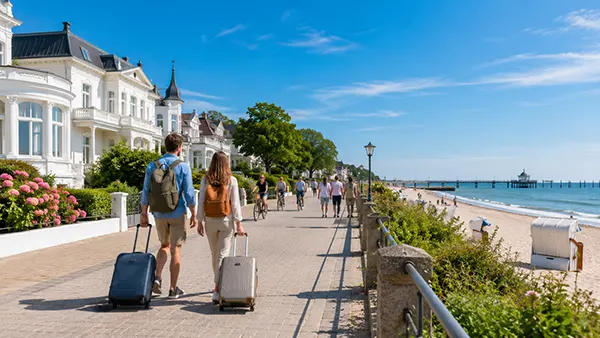
Keep the final morning close to your accommodation. In Bansin, walk along the promenade and look at the villas around the older resort streets; in Heringsdorf, choose the pier area or the treetop walk if its opening time matches your departure; in Ahlbeck, use the remaining time for the historic seafront and a café stop. Store luggage at the hotel after checkout when possible. A late-morning or early-afternoon departure gives enough flexibility for the border crossing and the change between the two Świnoujście stations without turning the day into a race.
Take RB23 back to Świnoujście Centrum. This station is on the Usedom side of the city and is different from Świnoujście, the Polish main-line station on Wolin. From Świnoujście Centrum, walk or use a local bus towards the centre and the Bielik ferry landing at Wybrzeże Władysława IV. After the short crossing to Warszów, continue on foot to the main-line station. The transfer is straightforward, but allow 45 to 60 minutes between the arrival of RB23 and the departure of the POLREGIO train, particularly in summer, with luggage or when a ferry is temporarily running to a reduced schedule.
The direct regional journey from Świnoujście to Szczecin usually takes around two hours, with additional departures available from Świnoujście Port on some services. An afternoon train should return you to Szczecin in time for an evening onward connection or another night in the city. Avoid booking a non-refundable long-distance departure only a few minutes after the scheduled arrival, as this route combines a local train, an urban transfer, a ferry and a regional train. A buffer of at least one hour in Szczecin is reasonable; more is advisable when continuing to an airport or crossing another national border.
Tickets, Border Documents and Final Checks for 2026
Use separate ticketing for the Polish and German sections. Buy the Szczecin–Świnoujście POLREGIO fare through an official sales channel shortly before travel, as prices and train categories depend on the selected service. On Usedom, the 2026 Usedom-Ticket costs €24 for one person, €29 for two, €34 for three, €39 for four and €44 for five people travelling together. It is valid on the stated calendar day until 03:00 the following morning, covers RB23, RB24 and participating VVG buses across the island and nearby mainland area, and permits up to three children aged 6–14 to travel free with the ticket holders.
Carry the correct original travel document even though Poland and Germany are within the Schengen area. EU citizens need a valid passport or national identity card; other travellers should carry the passport, visa or residence document required for their nationality and status. Temporary internal border checks can take place, and a driving licence or bank card is not a substitute for a travel document. Poland uses the złoty and Germany uses the euro. Card payment is common, but a small amount of local cash is useful for kiosks, public toilets, lockers or small seasonal businesses.
Check all four transport points on the day before travel: the POLREGIO service between Szczecin and Świnoujście, the Bielik ferry notice, RB23 and RB24 changes, and the local bus timetable for any optional inland trip. The published RB23 and RB24 timetable runs to 12 December 2026, while Polish regional schedules are issued in shorter validity periods and can change during engineering works. Reserve accommodation close to a station, avoid very tight final connections and keep one seaside stop optional. With those safeguards, the route remains manageable for first-time visitors and gives each place enough time to feel distinct rather than reducing the Baltic coast to a series of transfers.